
Anxiety Is Not a Flaw
Anxiety is not a defect.
It is a protection system that has become overactive.
Rumination is an attempt to regain control. You try to understand, anticipate, and mentally resolve potential problems. But the more you analyze, the more the tension increases.
The Anxiety Cycle
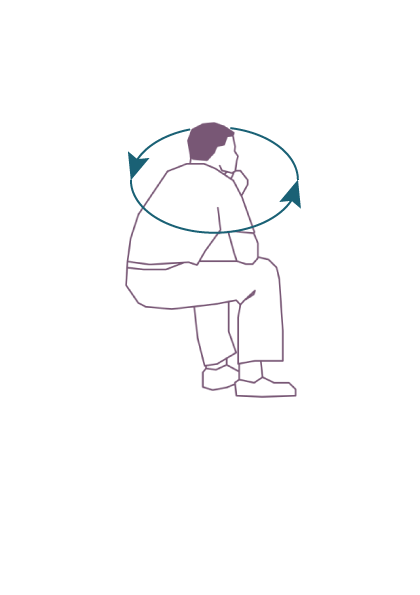
A situation triggers worry.
Your mind anticipates the worst-case scenario.
Your body activates (tension, hypervigilance).
Rumination tries to reassure you—but it actually keeps the alarm going.
The brain does not always distinguish between a real threat and an imagined one.
As a result, the body remains in a constant state of alert.
Where Does Anxiety Come From?
Depending on the situation, anxiety may be linked to:
- long-standing schemas (fear of failure, vulnerability, high self-expectations)
- a protective part that tries to prevent danger
- a nervous system that has become overly sensitive
In all cases, anxiety follows an internal logic.
And understanding that logic can already begin to change your experience.
What We Work On
The support process combines several approaches:
- TCBT: identifying and testing anxious thoughts
- Body regulation: calming the nervous system
- Mindfulness: learning to observe thoughts without becoming fused with them
- Schema therapy: understanding deeper underlying patterns
- Creative approaches, when relevant to you
What You Can Expect
Often, within the first few sessions, simply understanding the anxiety cycle already reduces its intensity.
Over time, you may begin to:
- reduce the frequency of rumination
- increase your tolerance for uncertainty
- regain emotional stability
The goal is not to eliminate anxiety entirely, but to help it become proportionate and regulated.